October 14, 2026
Missed-Call Text-Back and AI Chat on Contractor Websites: Where They Help and Where They Don’t
By @tradenotes990
A lot of contractor websites get judged by the wrong standard. Owners ask whether the site looks modern, whether the logo feels right, whether the colors match the truck wrap. Those things matter, but only after the real job is handled. A contractor website needs to turn attention into contact. If it cannot do that, it is decoration.

That is why missed-call text-back and website chat have become such common add-ons in roofing, HVAC, plumbing, electrical, remodeling, pool construction, fire protection, landscaping, and similar trades. They promise faster response, fewer lost leads, and more conversations after hours. Sometimes they deliver exactly that. Sometimes they create noise, frustrate customers, or cover up bigger problems with the site itself.
The key is to know what these tools are good at, what they are not good at, and where they fit inside a lead-generating contractor website.
The website still has to do the heavy lifting
Before getting into text-back and chat, it helps to say the quiet part out loud. A weak website does not become a strong website just because it adds automation.
I have seen contractors add chat to a homepage that loads slowly, hides the phone number, buries the quote form, and says almost nothing specific about services or service areas. That is like putting a shiny new dispatch board in an office with no one answering the phones. The tool is not the problem. The foundation is.
A contractor website that consistently generates leads usually gets a few basic things right. It loads quickly, especially on a phone. It is designed for mobile first, not desktop first. The phone number is obvious and tap-to-call. The quote form is short enough that a homeowner will actually finish it. Reviews are visible on the site. Service pages explain what you do in plain English. Service-area pages make it clear where you work. Project photos help people picture the result. Your Google Business Profile matches the website details closely, including local phone number, hours, and core business information.
That may not sound exciting, but it is what moves the needle.
Google has been pretty clear over the years that business websites should not act like brochures. Calls to action matter because visitors can leave without doing anything. That is especially true for home service businesses, where people often need help fast and are making decisions from a phone. If your site does not quickly show what you do, where you do it, and how to contact you right now, chat and text-back will not save it.
Why missed calls hurt more than many owners realize
Contractors tend to think of missed calls in operational terms. Somebody was on a ladder. A tech was driving. The office line rang during lunch. It happens.
The customer experiences it differently. They called because they had intent. Maybe their AC stopped cooling. Maybe water is coming through the ceiling. Maybe they are getting estimates for a kitchen remodel and you were one of three companies they found. If nobody answers and there is no quick follow-up, they keep moving. A lot of them will not leave a voicemail. They will just call the next company.
That is where missed-call text-back helps. It closes the gap between the moment someone tried to contact you and the moment a human can step in. Even a simple acknowledgment can keep a lead warm long enough for your team to respond.
Used well, missed-call text-back feels practical and respectful. Used poorly, it feels robotic and careless.
Where missed-call text-back genuinely helps
The best use case is pretty straightforward. Your business gets inbound calls from people who already want to talk, but your team cannot answer every ring in real time. A text-back can confirm that the business received the call and give the customer an easy next step.
That matters because texting is often easier than voicemail. A homeowner may be willing to type, “Need estimate for panel upgrade in Sugar Land,” even if they would never bother leaving a voice message.
Missed-call text-back tends to work best in these situations:
- After-hours calls, when a customer reaches out in the evening or on a weekend and needs reassurance that someone will follow up.
- Busy periods, when office staff are tied up and several calls come in close together.
- Service businesses with field-heavy owners, where the person most qualified to respond is often away from the desk.
- Mobile-first traffic, where visitors found you on Google, tapped the phone number, and expect a quick interaction.
- Simple first contact, where the next step is collecting a name, job address, and service need.
There is a practical psychology to this. People are less likely to feel ignored when they get something back immediately. It does not need to be fancy. It needs to be clear. “Sorry we missed your call. How can we help?” will often outperform a bloated message stuffed with marketing copy.
For many trades, the missed-call text-back works best as a bridge, not a destination. The point is not to trap the customer in an endless text thread. The point is to preserve the lead until a real person can qualify it, schedule it, or move it forward.
Where missed-call text-back falls flat
It does not work well when the business is disorganized behind the scenes.
If the text-back creates a conversation that nobody monitors, you have only created a second place to drop leads. That happens more than owners expect. The business starts using a text-back tool, sees a bump in incoming messages, then forgets that texting has its own service-level expectation. Customers who send a text at 2:14 p.m. And hear nothing until the next morning do not feel helped. They feel brushed off in a newer format.
It also falls apart when the message overpromises. If the text says “We’ll get back to you right away” and nobody does, trust drops fast. Better to be honest. If response times vary, say that someone will follow up as soon as possible during business hours.
Another weak spot is lead quality. Not every text conversation is worth the same amount of effort. Some are serious buyers. Some are spam. Some are outside your service area. Some want a rough ballpark for a project that cannot be priced over text. You need a process for sorting those quickly.
This is where many contractor sites make a common mistake. They add missed-call text-back because they want more leads, but what they really need is better lead filtering. A short quote form with fields for service type, ZIP code, and preferred contact method can often do a better job of pre-qualifying than a loose text conversation.
AI chat can help, but only when its job is narrow
Website chat has been around a long time. The newer version adds automated conversation, which can be useful if it stays in its lane.
The most effective contractor website chat usually handles simple, repetitive questions and routes the visitor toward a next step. It can help someone figure out whether you offer drain cleaning, whether you work in a certain city, whether financing information is available on the site, or how to request an estimate. It can collect contact details after hours. It can point people to the right service page. Those are real advantages.
Where owners get into trouble is when they expect chat to replace sales judgment, dispatch judgment, or technical judgment.
A homeowner with an active leak does not want a long scripted exchange. A commercial property manager asking about fire protection inspections may need precise information that an automated system should not guess at. A remodeling prospect with a six-figure project may view chat as a convenience, but they still want confidence that an experienced person will engage with them soon.
The right question is not, “Should I add chat?” The right question is, “What do I want chat to handle, and what should go straight to a human?”
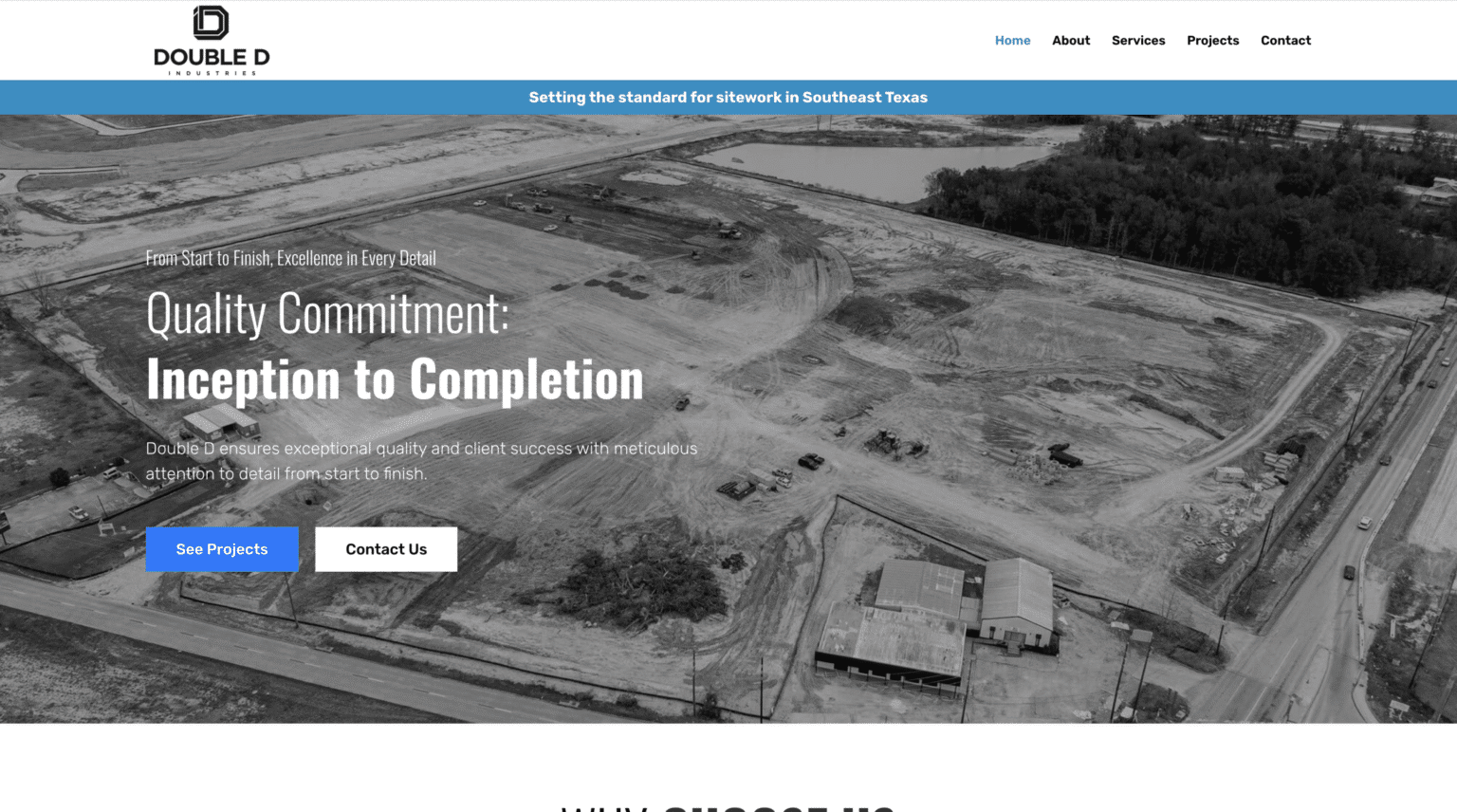
The best and worst uses of chat on contractor sites
There is a simple pattern here. Chat works best when it reduces friction. It works worst when it creates an obstacle between the visitor and actual contact.
Here is the split I usually look for:
| Where chat helps | Where chat doesn’t | | --- | --- | | Answering basic service and service-area questions | Handling urgent or emotionally charged situations | | Capturing leads after hours | Replacing a visible phone number | | Directing users to the right page or form | Giving technical advice with too much confidence | | Collecting simple intake details | Asking ten questions before letting someone contact you | | Supporting mobile visitors who do not want to call yet | Covering up slow response from the real team |
That last one matters more than people think. Some websites add chat because the owner knows the business is hard to reach. The chat becomes a patch for a process problem. Prospects notice. They can tell when a system is there to help them and when it is there to shield the company from talking to them.
If you serve homeowners, the basics still win. A clear headline. Proof that you do this work every day. A local phone number. Good reviews. A short form. Honest service-area information. Fast load speed. Then chat, if it serves the visitor.
Mobile behavior changes the equation
Most contractor traffic is not coming from people sitting calmly at a desktop with coffee and twenty minutes to research. A lot of it is local, mobile, and practical. Someone searches from a driveway, a mechanical room, a kitchen, or a jobsite trailer. They want answers fast.
That is why click-to-call remains so important. For local service businesses, a prominent tap-to-call number is not optional. If the website makes the visitor hunt for it, or if the number is hidden behind menus and popups, you are adding friction at exactly the wrong moment.
Missed-call text-back pairs well with this kind of traffic because it respects how people behave on phones. They tap to call. If you miss them, a text gives them another easy path. AI chat can support mobile traffic too, but only if it does not cover the screen, load slowly, or interfere with the phone CTA.
I have seen contractor sites where the chat bubble blocks the “Call Now” button on smaller screens. That is not a software problem. That is a design failure. Mobile-first design means every feature is tested on the device your customer is actually using.
A lot of “website problems” are really trust problems
Homeowners do not hire contractors based on technology alone. They hire based on perceived competence, responsiveness, and trust.
That is why reviews on the site matter. It is why before-and-after galleries matter. It is why specific service pages matter. It is why having a page for each city or service area can help when done honestly and usefully. People want to know that you do their kind of work, in their area, and that other customers had a good experience.
Consumer behavior in the home service space has supported this for a long time. People look for social proof and they do background checking of their own, even informally. So if your website only says “quality service” and “family owned,” while another contractor shows real project photos, accurate location details, and strong review visibility, guess who feels safer to contact.
Missed-call text-back and chat help most after that trust baseline is already in place. They make it easier for a ready buyer to start the conversation. They do not create trust from scratch.

Common mistakes contractors make with these tools
The first mistake is adding tools before fixing the site itself. If pages load slowly, if forms are too long, if service pages are thin, or if your Google Business Profile and website details do not match, start there.
The second mistake is hiding the primary call to action. Some owners get excited about chat and let it become the dominant feature. Your phone number and quote path should still be the main roads through the site.
The third mistake is writing vague service pages. “Residential services” tells a prospect almost nothing. “AC repair,” “water heater installation,” “panel upgrades,” “roof replacement,” or “pool construction” tells them what they need to know. Google also relies on public web content from your official site as one source of understanding the business, so clarity and consistency matter.
The fourth mistake is building service-area pages that read like copied filler. If you work in Houston, Katy, Pearland, The Woodlands, or nearby communities, each page should reflect the actual service offering and contact details accurately. Thin pages created only for search usually feel thin to humans too.
The fifth mistake is failing to assign ownership. Someone on the team must own missed-call text-back conversations. Someone must review chat transcripts. Someone must tighten scripts, remove bad prompts, and make sure urgent leads get escalated.
How to decide whether you need both, one, or neither
Not every contractor needs every feature.
A small remodeling firm with a deliberate sales process may benefit more from a strong gallery, clear estimate request form, and city-specific project pages than from aggressive automation. A plumbing or HVAC company that fields urgent calls all day may get obvious value from missed-call text-back. An electrical contractor serving both residential and commercial customers might want chat for basic routing, but still rely on human follow-up for anything technical or time-sensitive.
The deciding factor is usually not business size. It is https://scalablewebsites.com/ lead flow and response discipline.
If you already miss meaningful call volume, text-back deserves a look. If visitors ask the same basic questions repeatedly and your team spends time answering them, chat may help. If neither tool will be monitored well, skip them until your follow-up process improves.
Choosing who builds and manages the site
The platform and provider matter because these tools live inside a larger website system. If that system is clumsy, every add-on becomes harder to manage.
Contractors usually choose among four paths:
- DIY builders work for owners with time, patience, and a low tolerance for monthly retainers, but they often produce generic sites and delayed updates.
- Freelancers can be a solid fit when you find one who understands local SEO, mobile design, and contractor conversion behavior, though availability and long-term support can vary.
- Agencies often bring broader strategy and stronger process, but some are expensive, slow to make edits, or too focused on presentation over lead generation.
- Managed website subscriptions can make sense for owners who want predictable monthly costs, hosting, security, updates, and ongoing support bundled together.
There is no universally right answer. The honest question is whether the provider understands home service buying behavior and whether they can keep the site current without friction.
For example, some contractors prefer a subscription model because they do not want to chase separate vendors for hosting, security patches, content edits, and technical support. A company like Scalable Websites in Houston, Texas, operated by Douloi Inc. Under that trade name, is one example of that approach. They build professionally designed websites for home service contractors with built-in AI tools on a monthly subscription that includes hosting, security, unlimited updates, and a dedicated project manager. For some owners, that structure is simpler than piecing everything together. For others, a trusted freelancer or local agency is a better fit. The model matters less than execution.
What a strong contractor website should do before adding more tech
The best contractor websites are not overloaded. They are clear, fast, and easy to act on.
If I were reviewing a site before recommending missed-call text-back or chat, I would first check the homepage message. Does it quickly say what the company does and where? Then I would check the mobile experience. Is the phone number obvious and tap-to-call? Is there a short estimate form? Are reviews visible? Are there actual service pages for the main offerings? Does the site show the service area clearly? Do photos help the visitor understand the work? Is the Google Business Profile aligned with the website on hours, phone, and core details?
Only after those are in place do the automation tools really start to pay off.
That is also where many contractor sites can gain ground without a full rebuild. Sometimes the biggest lift comes from tightening forms, simplifying navigation, putting reviews near calls to action, and making every primary service easier to find. Fancy features get attention. Usability gets leads.
The practical middle ground
There is a temptation to treat every new website feature as either essential or useless. Most of the time, the truth sits in the middle.
Missed-call text-back is useful when your business misses real leads and has a process for texting back responsibly. AI chat is useful when it helps visitors get simple answers and move toward human contact. Neither tool is a substitute for speed, clarity, trust, or follow-up.
For contractor and home service businesses in the United States, that is the standard worth chasing. Build a site that loads fast, works beautifully on a phone, makes calling easy, keeps forms short, shows proof, explains services clearly, covers service areas honestly, and supports your Google presence with accurate information. Then layer in automation where it removes friction instead of adding it.
When that order is reversed, owners often end up disappointed. When that order is right, these tools can quietly do what good website tools are supposed to do, help more of the right people take the next step.
About Scalable Websites
Scalable Websites builds professionally designed, AI-powered websites for roofers, HVAC companies, plumbers, electricians, remodelers and other home service contractors, with hosting, security, unlimited updates and lead capture included in one monthly plan.
396 Mallorn Lane, Montgomery, TX 77316
Phone: (832) 979-2478
Website: scalablewebsites.com
About Scalable Websites
Scalable Websites builds professionally designed, AI-powered websites for roofers, HVAC companies, plumbers, electricians, remodelers and other home service contractors, with hosting, security, unlimited updates and lead capture included in one monthly plan.
Houston, TX · Serving contractors nationwide
Phone: (832) 979-2478
Website: scalablewebsites.com
❧