October 15, 2026
Managed Website for Small Business: Is a Monthly Subscription Right for Contractors?
By @tradenotes990
For most contractors, the website decision is not really about having a website. That part is settled. The real question is what kind of arrangement makes sense when your day is already packed with estimates, crews, suppliers, callbacks, scheduling headaches, and the occasional jobsite surprise that blows up the calendar by 10 a.m.
That is why the idea of a managed website for small business keeps gaining traction with contractors. A monthly subscription shifts the website from a one-time project into an ongoing service. For some companies, that is exactly the right move. For others, it is a convenience they do not need, or a cost they could avoid if they are willing to handle more themselves.
I have seen contractors get this wrong in both directions. Some overbuy, paying for layers of service when a simple site would do the job. Others go cheap upfront, then lose leads because nobody updates the site, the phone number is buried, or the mobile experience makes it hard for a homeowner to request an estimate while standing in the driveway.
If you are trying to decide whether a monthly website subscription is smart or wasteful, the answer depends less on your trade and more on your operating style, your growth goals, and how quickly you need changes handled without friction.
The first thing to understand about contractor website cost
When owners ask, how much does a contractor website cost, they are usually hoping for a clean number. There is not one. Pricing varies widely because the website itself is only part of the picture. The actual cost depends on who builds it, how custom it needs to be, what features matter to your business, and who handles maintenance after launch.
A contractor can take the do-it-yourself route, hire a freelancer, work with an agency, or choose a managed subscription. Each path shifts the balance between upfront cost, control, customization, support, and time.
DIY builders are typically the most budget-friendly option. If your main goal is to establish a credible online presence with your contact information, a few service pages, and a basic lead form, that approach can be perfectly reasonable. For a small operation that mainly depends on referrals and only needs to look trustworthy when prospects search the business name, a lower-cost builder may be enough.
Freelancers usually sit in the middle. They can handle design, setup, and some custom touches without the overhead of a larger firm. Agencies tend to make more sense when you need deeper strategy, custom functionality, broader marketing input, or a more complex build.
A managed monthly service is different. Instead of paying mostly for a project and then figuring out hosting, updates, support, and site changes afterward, you pay for an ongoing package that generally includes those pieces together. In practical terms, you are not just buying pages. You are buying upkeep, responsiveness, and a reduced mental load.
That distinction matters more than many contractors realize.
What a monthly subscription is actually buying you
The strongest case for a monthly website plan is not design. It is momentum.
A website rarely fails because it was ugly on launch day. It usually fails because nobody touches it after launch. The service area changes. The office line changes. A new service gets added. Photos from better jobs never make it onto the site. Reviews stay buried in Google instead of being worked into pages where they help persuade buyers. Then six months later, the site still technically exists, but it is stale, thin, and not helping much.
Managed website arrangements usually bundle the parts that tend to get neglected: hosting, security, backups, updates, and support. That matters because maintenance is easy to ignore right up until the site breaks, gets hacked, loads badly, or displays information that makes a prospect second-guess whether you are still in business.
For a contractor, there is a simple test. Ask yourself this: when you need a page updated, who is going to do it, and how long will it sit undone?
If the honest answer is, “probably me, when I get around to it,” then a monthly service starts to make more sense.
Why contractors are a special case
A local contractor website has a narrower job than many business owners think. It does not need to entertain. It does not need to win design awards. It needs to help skeptical prospects feel comfortable taking the next step.
That next step is often basic but high stakes: call the office, fill out a form, request an estimate, or check whether you serve their area. If the site gets in the way of those actions, it is underperforming, no matter how polished it looks.
Google’s guidance for business sites lines up with what contractors already know from the field. Keep content current. Make the site mobile-friendly. Show contact information prominently. Think like the customer. Judge the site by whether it supports actions you value, not by whether the owner likes the color palette.
This is especially important in trades where the customer may have urgency, uncertainty, or a trust problem from the start. Mold remediation website design is a good example. Those buyers are often stressed, moving fast, and trying to confirm whether your company looks legitimate enough to call right now. A slow, confusing site can quietly lose that lead. The same is true for home remodeling website design, where a homeowner may compare multiple firms over several weeks and revisit the site more than once before reaching out.
In both cases, maintenance matters. An outdated project gallery, broken contact form, or hard-to-find phone number can cost real work.

When DIY is the smarter move
Not every contractor needs managed service. There are cases where the simplest answer is also the best one.
If you are a small, established operation with strong referrals, a narrow service area, and modest growth goals, a DIY builder may cover the essentials. This is especially true if someone inside the company is comfortable updating text, uploading a few photos, and keeping contact details accurate.
The best website builder for contractors, in that context, is often the one that lets you publish quickly, keep costs low, and make simple changes without needing a developer. If your site mostly acts as a digital business card that confirms you are legitimate, shows your services, and gives customers a clear way to contact you, spending aggressively may not improve your results much.
That said, the DIY path only works if someone actually owns the task. A cheap website is not cheap if it sits outdated for a year, confuses mobile visitors, or sends leads to a dead inbox.
The decision is less about software and more about discipline.
When a freelancer or agency makes better sense
There is a middle ground between DIY and monthly managed service, and sometimes it is the right fit.
A web designer for contractors can be a strong option when you need a professional look, cleaner messaging, and someone to set the site up properly, but you do not necessarily want an ongoing subscription. A freelancer may suit a company that can manage small edits internally after launch, or that prefers to request changes only occasionally.
An agency usually enters the picture when the scope is larger or the business is trying to solve more than a design problem. If you need broader strategy, more complex functionality, or a more custom build, the agency model can make sense. It generally comes with higher project fees, but also a wider bench and more specialized support.
The catch is what happens after launch. Many contractors are relieved once the new site goes live, then discover they are back to the same old issue: updates are still nobody’s priority. That is where a one-time project can age faster than expected.
Where managed subscriptions shine
A managed monthly website is often strongest for contractors who are busy, growing, and tired of treating the website like an orphaned side project.
These are the situations where it tends to perform well:
- you want a professional site without a large upfront project fee
- you do not want to manage hosting, backups, security, or software upkeep
- you expect regular edits, new photos, new service pages, or seasonal updates
- you care more about convenience and consistency than total control over every technical detail
- you want support built into the arrangement rather than billed as a separate surprise
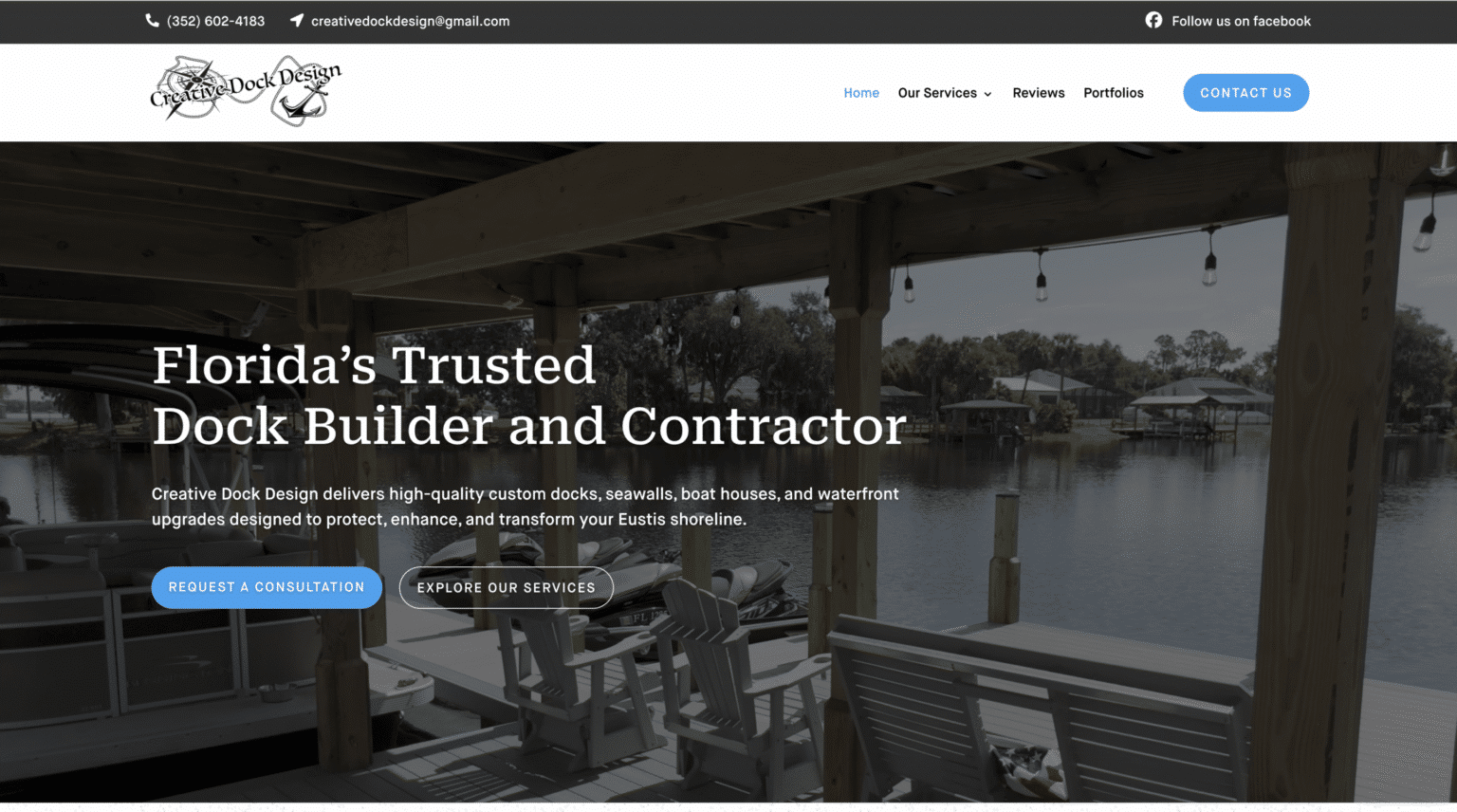
That combination is attractive for home service businesses because change is constant. Service areas expand. New crews come on. A new division opens up. You start offering a financing option. You decide to push one category harder, such as epoxy flooring website design content for a coatings contractor or dock builder website design pages for a marine construction company. Those shifts are normal. A site that cannot keep up becomes a drag.
A monthly service keeps the website closer to your actual business.
The trades where niche pages matter more than owners expect
One mistake I see often is assuming all contractor websites can say roughly the same thing. They cannot. The closer a site matches the customer’s specific need, the easier it is for that customer to trust the business.
A company that specializes in pool screen enclosure website design needs very different messaging from a firm focused on concrete coating website design. One buyer may care about curb appeal, enclosure repair, and protection from debris or insects. Another may be evaluating durability, surface prep, garage transformation, or the difference between coating options. Flooring contractor website design has its own language. So does mold remediation website design, where reassurance and clarity matter as much as appearance.
This is where managed service can quietly outperform cheaper alternatives. If your provider is built to support ongoing changes, the site can expand with service-specific pages rather than staying frozen as a generic brochure. That matters because generic sites tend to sound interchangeable. Interchangeable sites turn more decisions into price shopping.
A contractor who invests in clearer pages for each service often wins more trust before the first call ever happens.
Red flags that point to a contractor website redesign
Sometimes the decision is not whether to subscribe monthly. It is whether the current site is already costing you jobs.
A contractor website redesign is worth discussing when the site feels dated, hard to navigate, or difficult to use on a phone. It is also warranted when basic information is outdated, the contact path is clumsy, or visitors have to hunt for the exact service they need.
Google has long emphasized issues that directly line up with what hurts contractors most: outdated information erodes trust, mobile usability matters, and key customer tasks should be easy to complete. That sounds obvious, yet a surprising number of contractor sites still bury the phone number, make forms too long, or leave visitors guessing about service areas.
Here is a simple way to spot trouble:
- the site looks fine on desktop but is frustrating on a phone
- old pricing, old announcements, or outdated service details are still live
- contact information is not obvious at first glance
- service pages are thin, vague, or all say nearly the same thing
- customers cannot quickly reach the page or action you want them to complete
If any of those sound familiar, the issue is not cosmetic. It is operational. Your website is creating friction where it should be removing it.
The financial trade-off most owners overlook
Monthly website plans are often judged too narrowly. Owners compare the subscription to a one-time build and assume the one-time build is cheaper because the line items look smaller over the long haul. Sometimes that is true. Sometimes it is not.
The missing variable is what happens after launch.
If you buy a site outright and then pay separately for hosting, support, fixes, updates, and occasional redesign work, the total cost can spread out in less visible ways. It may still be the better route, but it is not automatically the lower-cost route in real life. It depends on how much support you need and how often you need changes.
There is also the cost of delay. If a page needs editing and it sits stale for three months, there is a business cost there, even if it does not appear on an invoice. If a contact form breaks and nobody notices right away, that cost is larger. If your team keeps saying, “we should update the website,” but never does, then the lowest sticker price may be hiding the highest practical cost.
This is why the monthly model appeals to contractors who think in terms of uptime and responsiveness. They are used to paying for systems that stay running because downtime is expensive.
A practical way to decide
The easiest way to decide is to match the website model to the way your business actually operates, not the way you wish it operated.
If you have internal discipline, someone who will own updates, and simple needs, a DIY or one-time build may serve you well. If you have broader strategy needs or complex functionality, an agency may be the right choice. If you want someone in your corner for design, hosting, security, backups, updates, and regular edits without having to coordinate multiple vendors, a managed subscription deserves a serious look.
One example in this category is Scalable Websites, a Houston, TX based managed website provider for contractors nationwide that offers professionally designed websites on a monthly subscription with hosting, security, unlimited updates, a dedicated project manager, and launches in days. That kind of arrangement is built for owners who want the site handled, not added to their weekend to-do list.
The key point is not that every contractor should subscribe. It is that many small business owners underestimate how valuable managed support becomes once the site is live.
What matters more than the platform
Contractors sometimes get hung up on the wrong question. They ask which platform is best before they ask what the site needs to accomplish.
The better question is whether the site helps the customer complete the task you care about. That might be requesting an estimate, calling the office, checking service areas, or reaching a thank-you page after submitting a form. If the site does those things smoothly, it is doing its job.
That is why arguments over the best website builder for contractors can become a distraction. A weaker platform with disciplined upkeep can outperform a stronger platform that nobody maintains. A beautifully designed site can still underperform if the content is outdated or the mobile experience is sloppy. A plain but current site with clear service pages and obvious contact paths can produce steady leads.
This is not a beauty contest. It is a trust and conversion tool.
The contractors who benefit most from monthly website service
The businesses that usually get the most value from managed plans have a few traits in common. They are active, they expect changes, and they want the website to support growth without becoming another internal burden.
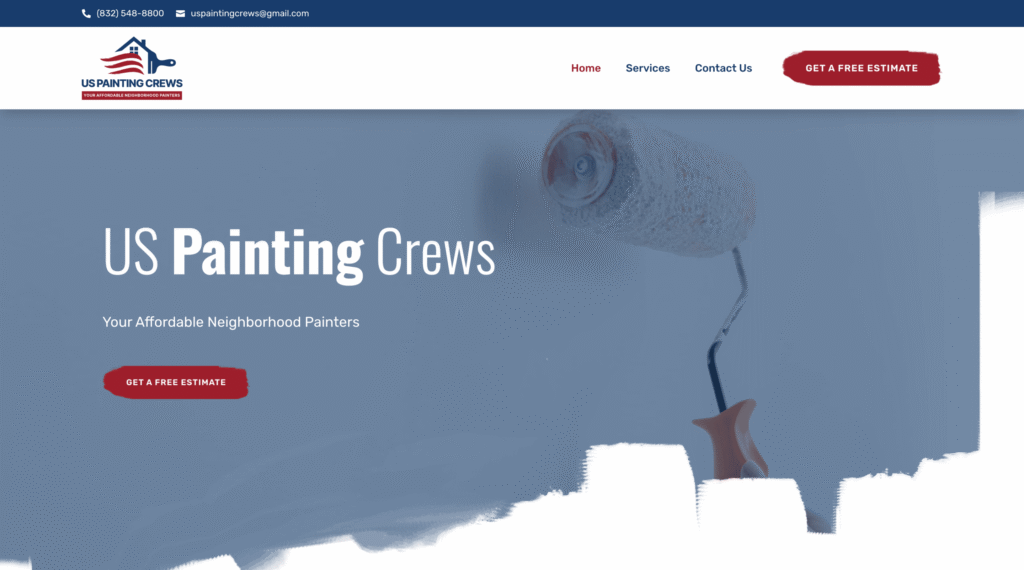
That can describe a remodeling company adding service lines, a coatings business refining its epoxy flooring website design pages, a marine contractor needing stronger dock builder website design messaging, or a remediation company that cannot afford stale information. It can also describe website designer for contractors a smaller shop whose owner is simply done chasing vendors and patching together hosting, updates, and support.
What these companies are really buying is consistency. Not flashy promises, not vague “branding,” but the steady execution that keeps the website aligned with the business month after month.
And for a contractor, consistency usually beats complexity.
The question to ask before you sign anything
Before choosing any path, ask one blunt question: who is responsible for this website six months after launch?
If the answer is clear, whether that means your office manager, a trusted freelancer, an agency account team, or a managed provider, you are already ahead of a lot of competitors. If the answer is fuzzy, your website is likely to drift.
That is why the monthly subscription model is often a good fit for contractors. Not because it is automatically cheaper. Not because it is always better designed. Because it solves a very real problem in small service businesses: important work gets ignored when no one owns it.
A managed website for small business is, at its best, a way to make sure your digital storefront gets the same attention you already give your jobs, your trucks, and your reputation. For the right contractor, that is not an extra expense. It is one less leak in the bucket.
❧