October 14, 2026
How to Build a Contractor Website That Generates Leads With Fast Pages, Quote Forms, and Review Trust
By @tradenotes990
A contractor website does not need to win design awards. It needs to do something much harder and more valuable: turn local searchers into phone calls, quote requests, and booked jobs.
That sounds obvious, but many contractor sites miss the point. They get some traffic, show a few photos, maybe even rank for a service or two, yet the phone stays quiet. In most cases, the problem is not one giant failure. It is a stack of smaller ones. The pages load slowly on mobile. The service area is vague. The quote form asks the wrong questions or too many of them. Reviews exist, but they are buried. The business profile on Google is incomplete or mismatched. None of those issues looks fatal on its own. Together, they quietly kill momentum.
A contractor website that generates leads usually gets the basics right in a disciplined way. It is easy to find, easy to trust, and easy to contact. Fast pages matter because impatient visitors bounce. Quote forms matter because not every prospect wants to call. Reviews matter because homeowners compare options quickly, especially when the work is urgent or expensive. And local visibility matters because most service businesses are competing neighborhood by neighborhood, not nationwide.
The contractors who do well online tend to treat the website as part sales rep, part dispatcher, part proof file. That mindset helps. A website is not just branding. It is a working asset tied to search, maps, calls, and follow-up.
Start with the job the website must do
Before choosing layouts, colors, or galleries, get specific about the action you want people to take. For most home service businesses, there are only a few real outcomes that matter: a phone call, a quote request, or a booking inquiry. Everything else should support one of those.
This matters even more for local trades because intent varies by service. A water damage restoration website design needs to accommodate urgency. Visitors often need help now, on a phone, under stress. A kitchen and bath remodeling website design serves a longer consideration cycle. People compare, save examples, and come back later. A foundation repair website design needs to lower anxiety and build credibility fast because the stakes feel large. The same is true for plumbing website design, electrician website design, solar company website design, and fence contractor website design, but each will attract slightly different search behavior and expectations.
When contractors ask how to get more leads for contractors, the answer is rarely “add more pages” in the abstract. It is usually, “make the next step feel obvious and safe.” If a homeowner lands on a service page, they should know within seconds that they are in the right place, that you serve their area, and that contacting you will not be a hassle.
Speed is not a technical vanity metric
Fast pages convert better because they reduce friction, and Google also recommends strong Core Web Vitals for Search success. The targets are clear: Largest Contentful Paint under 2.5 seconds, Interaction to Next Paint under 200 milliseconds, and Cumulative Layout Shift under 0.1.
Those benchmarks are useful because they connect performance to real user experience. A slow hero image, a jumpy page layout, or a delayed button response does not just hurt a score. It interrupts trust. On a contractor site, that interruption happens at the worst possible moment, right when someone is deciding whether to call.
Mobile performance deserves special attention. Many contractor leads come from people searching from their phones, often while standing in a kitchen with a leak, sitting in a driveway looking at a damaged fence, or comparing repair options after work. Google’s broader page experience guidance also points to mobile friendliness, HTTPS, and avoiding intrusive interstitials that block the main content. In practical terms, that means the site should open quickly, feel stable, and let visitors get to the phone number or form without fighting pop-ups.
I have seen contractor sites where the biggest problem was not the copy or the design at all. It was a homepage stuffed with oversized images, scripts, sliders, and animations that looked impressive on a desktop mockup but felt heavy on an actual phone. The owner blamed poor lead volume on rankings. The better diagnosis was simpler: the site made urgent prospects wait.
What the first screen needs to communicate
The top of a contractor homepage carries more weight than many owners realize. Visitors do not read it like a brochure. They scan. They want confirmation.
A good first screen usually answers three questions immediately. What do you do. Where do you do it. How do I contact you right now.
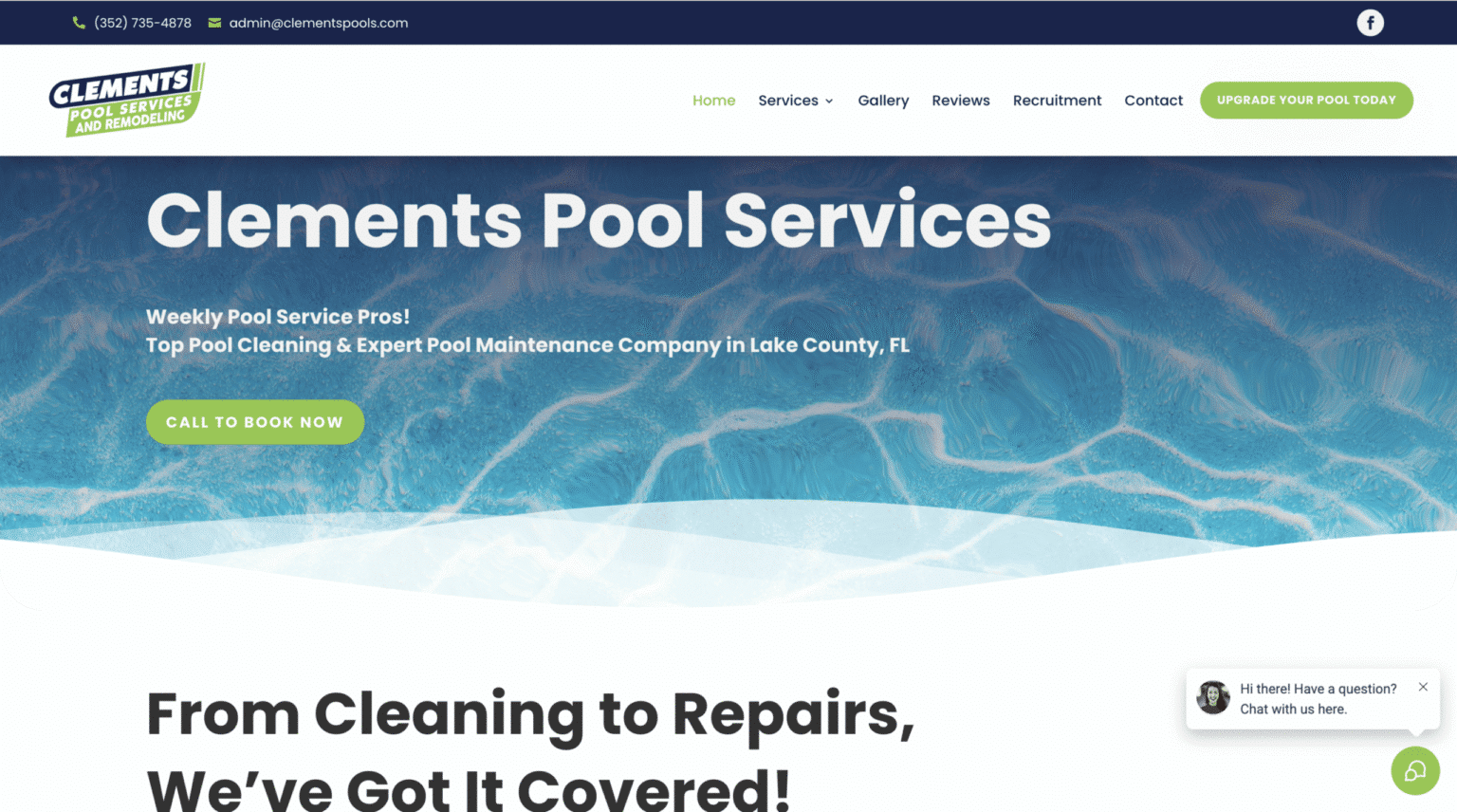
That sounds basic, but it is where many sites drift into generic language. “Quality service you can trust” says almost nothing. “Licensed plumbing contractor serving [city or service area]” is much stronger because it removes ambiguity. If the business is a service-area company, the site should reflect the areas actually served, not a vague claim to cover “all surrounding communities.”
For a contractor lead generation website, the homepage should make room for trust proof early, not buried at the bottom. Reviews, recognizable service areas, clear contact paths, and straightforward service descriptions all help. A polished aesthetic can support confidence, but clarity does more work than decoration.
Here are five homepage elements worth getting right:
- A plain-language headline that names the service and the area served.
- A visible phone number and a clear path to request a quote.
- Review trust placed near the top, not hidden on a separate page.
- Links into the main service pages and key service-area pages.
- A mobile layout that stays readable and tappable without pinch-zooming.
That is enough structure to guide the homepage without turning it into a template exercise.
Quote forms should help people ask for help, not fill out paperwork
A quote form is one of the biggest conversion points on a contractor website, yet it is often treated like an afterthought. The usual failure mode is excess. Too many fields, too many required answers, too many steps. The visitor came looking for help, not an intake process built for your office software.
Short forms usually work better because they lower effort, but “short” does not mean careless. A form should collect enough information for a useful follow-up while respecting the urgency and attention span of the person filling it out. On some jobs, especially emergency work, the best form is a fast one that gets the basics and moves the conversation to the phone.
A practical quote form for most contractors asks for only what the office needs to respond intelligently:
- Name
- Phone number or email
- Service address or ZIP code
- Type of service needed
- Brief description of the problem or project
That is enough to route the inquiry, confirm the service area, and reply with context.
The other side of the form matters too. If someone submits a request and hears nothing, the form becomes a trust breaker. Google’s local services guidance makes an important point here: missed-call handling matters, and quick replies to leads are supported directly in the Google Ads leads workflow. Even if you are not using every Google ad product, the broader lesson stands. Speed to response matters because lead quality drops fast when the follow-up lags. A good website cannot compensate for slow contact handling.
Review trust works best when it feels real and close to the decision
Reviews are one of the strongest trust signals for contractors because they reflect lived customer experience. But review trust is not just about having stars next to your name. It is about how and where that proof shows up.
Google’s guidance is clear that reviews must reflect genuine experiences. Incentives for reviews are prohibited. Businesses can ask customers to leave reviews, use a Google review link or QR code, and should respond promptly. Those details matter because some contractors still treat reviews like a volume game rather than a reputation system. The safer and more durable approach is simple: ask consistently, make it easy, and respond like a professional.
On the website itself, review trust should support action. If a service page explains a high-stakes job such as structural repair or restoration, that is a good place to show a few relevant customer comments. If the homepage invites quote requests, nearby review proof reassures hesitant visitors. Generic praise helps a little. Specific reviews tied to responsiveness, cleanliness, communication, or finished results help much more.
There is also a sequencing issue here. If you ask for a quote before giving people a https://privatebin.net/?33f045b874c358eb#BMYVdRv8SFnc7wR1kuibH8o6WRi3vmSVvpZpX8z3kXUo reason to trust you, some will hesitate. If you show only reviews and bury the contact options, others will leave without acting. Good lead generation pages put proof and action within easy reach of each other.
Local SEO for home service businesses starts with accuracy
A lot of local SEO advice gets fuzzy because it focuses on hacks. For contractors, the strongest foundation is usually accuracy across the website and the business profile.
Google Business Profile for contractors matters because a verified profile helps customers find a business on Search and Maps, shows practical details like hours, phone, and website, and can direct customers to the website, social media, and booking links. If your business serves customers at their location rather than at yours, Google allows a service-area setup with one central office or location and a designated service area. If you do not meet customers at your address, the address should be hidden and the profile should provide a phone number or website representing that individual location.
That guidance is easy to overlook, but it has real implications. Many contractors either show an address that is not meant for customer visits or leave the service area too broad and sloppy. Google recommends keeping service areas accurate and specific, defined by cities, ZIP codes, or other places served. That means your website and your profile should tell the same local story. If the profile says one thing and the service pages imply another, trust weakens for both users and search systems.
A clean setup usually looks like this in practice: the Business Profile is verified, the service area is defined accurately, the hours and phone are current, and the website has public pages that clearly describe the services and areas covered. Google’s technical guidance also says pages must be publicly accessible and not blocked to be indexed. That may sound obvious, but I have seen service pages hidden behind site settings, broken navigation, or noindex mistakes that quietly erased local visibility.
Service pages and area pages need a purpose
Contractors often hear that they need more pages, and that advice can be right or wrong depending on execution. More pages help only when each page gives a searcher a better answer.
A plumbing website design, for example, should separate major service categories if those categories represent different user intent. Emergency repair, fixture installation, and drain issues are not the same search. An electrician website design may need distinct pages for troubleshooting, panel work, or lighting if that reflects real demand and real scope. A solar company website design may need to balance educational content with quote-ready pages. A water damage restoration website design should emphasize urgency, service area clarity, and trust signals because visitors often need immediate action.
Service-area pages deserve the same discipline. If you serve multiple cities or ZIP-based territories, pages can help, but only when they are accurate and useful. A useful area page tells a visitor that you serve that location and helps them understand how to contact you for that service. A weak area page is just a cloned paragraph with the city name swapped out. Users can feel that immediately.
Structured data helps search engines understand the business
Google’s local business structured data documentation gives contractors a practical opportunity: mark up the core local details the business wants understood clearly. That can include business hours, departments, address, geographic information, phone, and more.
This does not replace strong content or a solid Business Profile, but it can reinforce consistency. The value here is not magic ranking power. It is clearer business information. For local service businesses, clarity compounds. When the site, the profile, and the page details align, both visitors and search engines have less ambiguity to work through.
The best use of structured data is boring in the best sense of the word. It supports the facts already visible on the page. Hours should match hours. Phone numbers should match the right location or office. If the business is operating as a service-area business, that should be reflected thoughtfully across the broader setup.
Trust is built in the small details
Contractors sometimes think trust is only about reviews and badges. Those help, but trust is also built through the page experience itself.
A secure site using HTTPS matters. So does a mobile layout that avoids intrusive interstitials. If a visitor taps into a page and instantly gets hit with an oversized pop-up covering the content, that is not just annoying. It delays the very information they came to find. On a desktop, a cluttered contact area can still be navigable. On a phone, it can be fatal to conversion.
Language matters too. Homeowners are not impressed by vague promises. They look for signs of competence. Specific service descriptions, clear area coverage, current business information, and responsive follow-up all signal professionalism. A contractor website that generates leads usually feels settled and coherent. Nothing important is hard to find. Nothing feels hidden.
What changes by trade, and what does not
The broad system is consistent across trades, but emphasis shifts.
For foundation repair website design, visitors often need reassurance and evidence of professionalism because the perceived risk is high. For fence contractor website design, visuals may play a bigger role because homeowners are comparing style and scope. For kitchen and bath remodeling website design, project examples may help support a slower lead cycle. For water damage restoration website design, immediate contact options matter more because delays can feel costly. For electrician website design and plumbing website design, the split between urgent and non-urgent calls often shapes the page structure. For solar company website design, education can matter more because the purchase path is longer.
What does not change is the underlying lead framework. The site still needs to be fast, locally clear, easy to contact, and visibly trustworthy.
The handoff between website and operations is where many leads are won or lost
A website can generate the inquiry, but the business still has to catch it. This is where many discussions about contractor lead generation get too narrow. Owners focus on ranking and design but ignore response handling.
If a phone rings and goes unanswered, or a form submission sits for hours, the website did its part and the business did not. Google’s guidance around lead handling and missed calls underscores the practical importance of responsiveness. Fast follow-up is not a bonus feature. It is part of conversion.
This is one reason I prefer simpler quote forms and clearer contact paths for most contractors. The smoother the handoff, the less chance of leakage. A clean website paired with disciplined lead response will usually outperform a fancier site attached to a slow office process.
Build for clarity first, then refine
If you are rebuilding or improving a contractor website, resist the urge to start with cosmetic ideas. Start with the work the site needs to do.
Make sure the business can be found through a verified Google Business Profile. If you are a service-area business, set the service area accurately and hide the address when customers do not visit it. Keep the website publicly accessible and indexable. Improve mobile friendliness, HTTPS, and page experience. Aim for strong Core Web Vitals, especially LCP under 2.5 seconds, INP under 200 milliseconds, and CLS under 0.1. Put clear service and location language at the top of key pages. Use forms that ask for enough information to respond, but not so much that people abandon them. Ask for genuine reviews in a compliant way, make it easy for customers to leave them, and respond promptly.
That is not glamorous work. It is effective work.
The best contractor websites do not feel clever. They feel useful. They answer the visitor’s immediate questions, reduce uncertainty, and create an easy next step. When that foundation is in place, lead generation becomes less mysterious. You are no longer hoping the website somehow produces more business. You have built a system designed to earn trust quickly and turn local interest into real conversations.
❧